
The “In the Wake of Wallace” Indonesia and Borneo expedition on Aurora Expeditions picked up pace after a bit more than a day at sea. It was interesting to see how, when on this sort of expedition in remote areas with wide variances in tides, poor navigational charts, and limited local nautical guides with sufficient experience, some of the planning has become “reverse-engineered”.
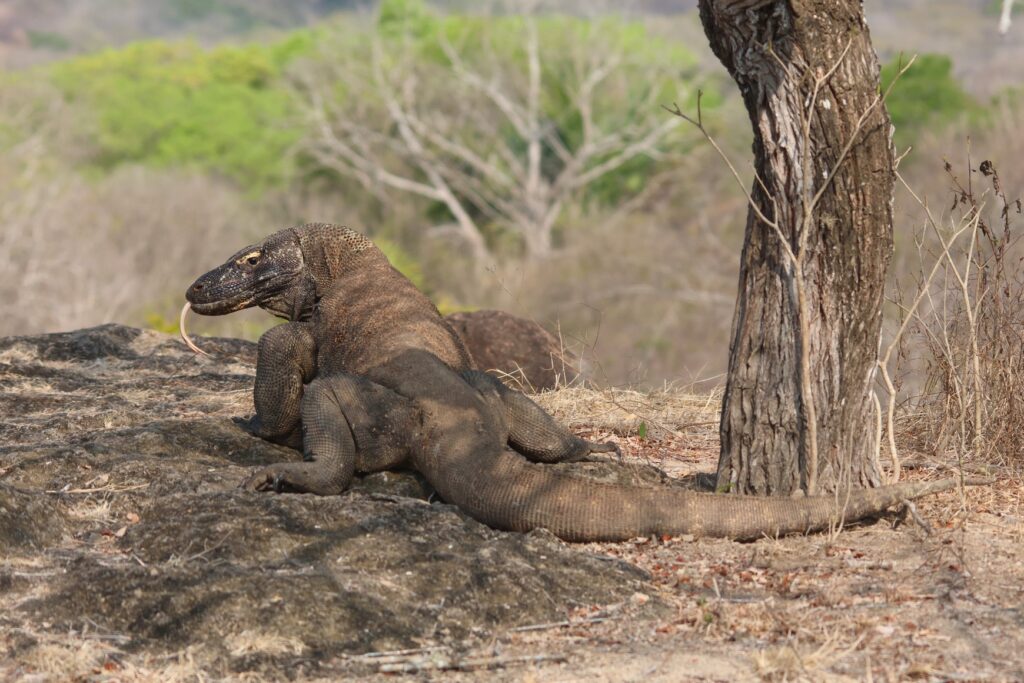
The plan is to reach Komodo Island in the very early morning for a private and more enriched Komodo Dragon experience. But that isn’t for three days. To accomplish that, the plans for the next two days needed to be adjusted so that we would reach it on time, without degrading the experiences over the next two days. Complicating that are the extreme king (or spring) tides and their effects on specific portions of small islands and narrow silty channels. In other words, this is a true expedition.
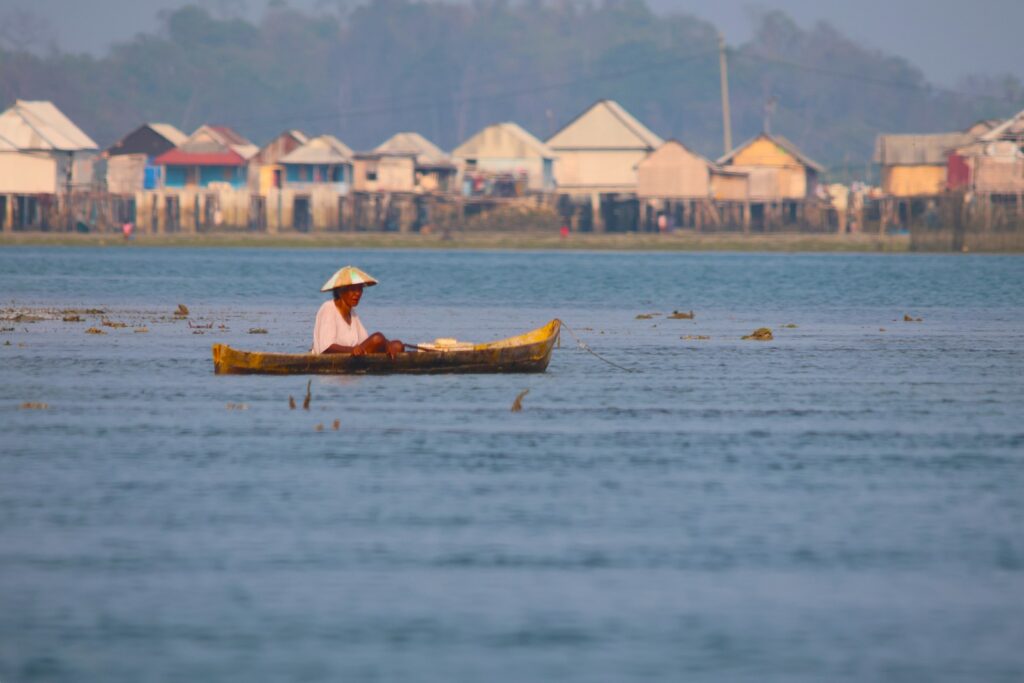
The next day we arrived for a very early expedition. We were supposed to visit Hoga Island for an early morning nature walk and birding, but the tide was too low. (Those who chose snorkeling said it was great.) So, we flipped our schedule and visited the sea gypsies in Sampela Village in Wakatobi National Park in Southeast Sulawesi first, with the birding to come afterward. With the tides working against us, it was a long, slow zodiac transit through rudimentary channel markers in very shallow water to reach the village. With one or two people in a light flat-bottomed boat, it would have been no problem, but with ten or more people in a heavy zodiac, it was challenging, but the expedition team got it done.
While a talk on their culture before the visit would have been helpful to better understand their society, a calm friendliness by many and tolerance by others made this visit through their ramshackle village on stilts very worthwhile and enriching.
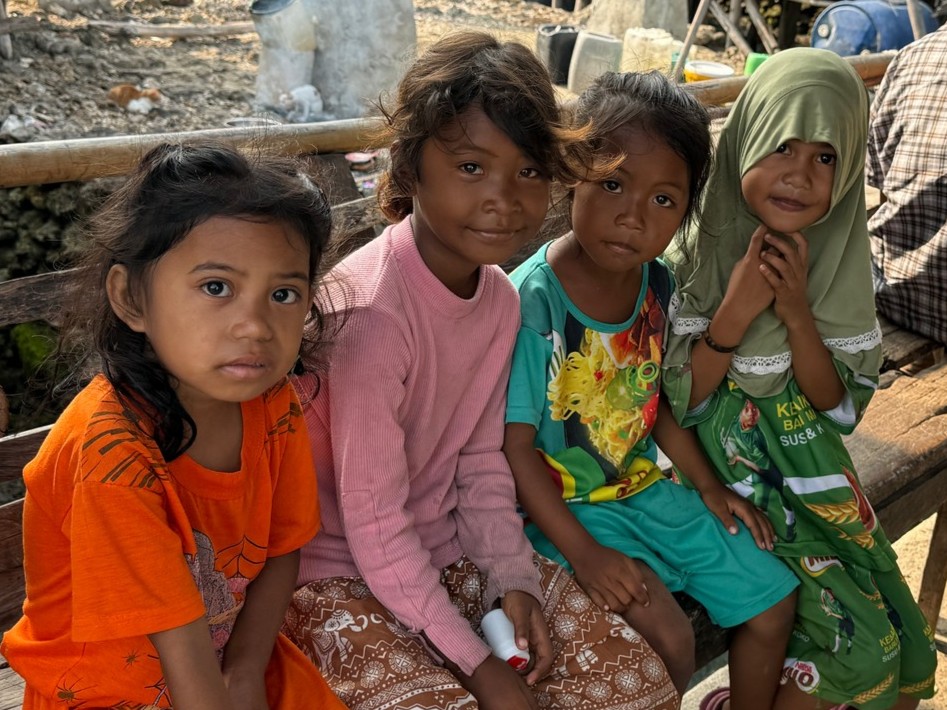
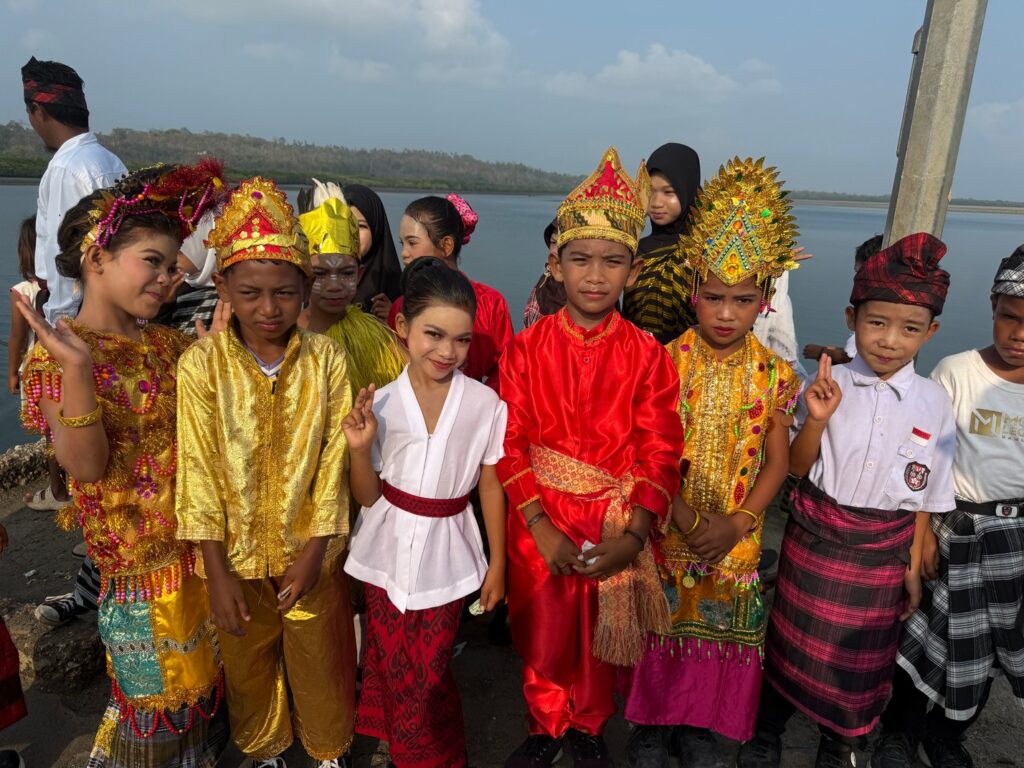
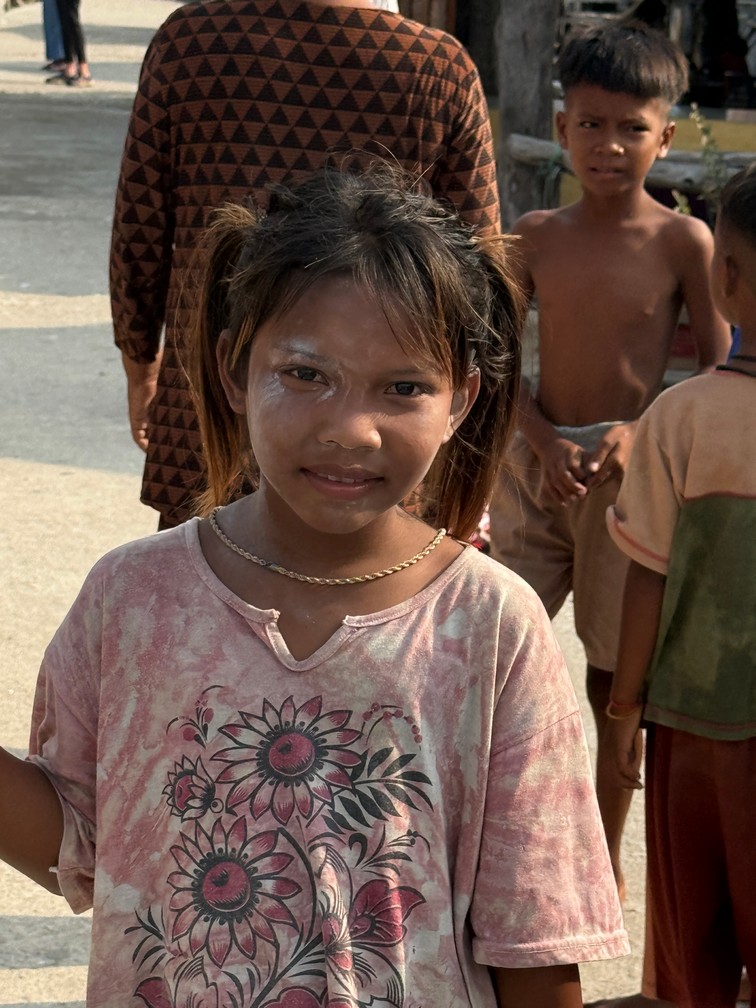
Unlike the sea gypsies I met in Myanmar, these people do not do drugs and chill during the day and fish for squid by night. There were very few men around, as they fish by day, whether by gill nets, hook and line, fish traps, or crabbing in the mud. While the houses and surroundings were impoverished, the women and younger children were all well-nourished and cleanly clothed, and the older children (boys and girls) were sent off to school in their clean white uniforms just as we arrived.
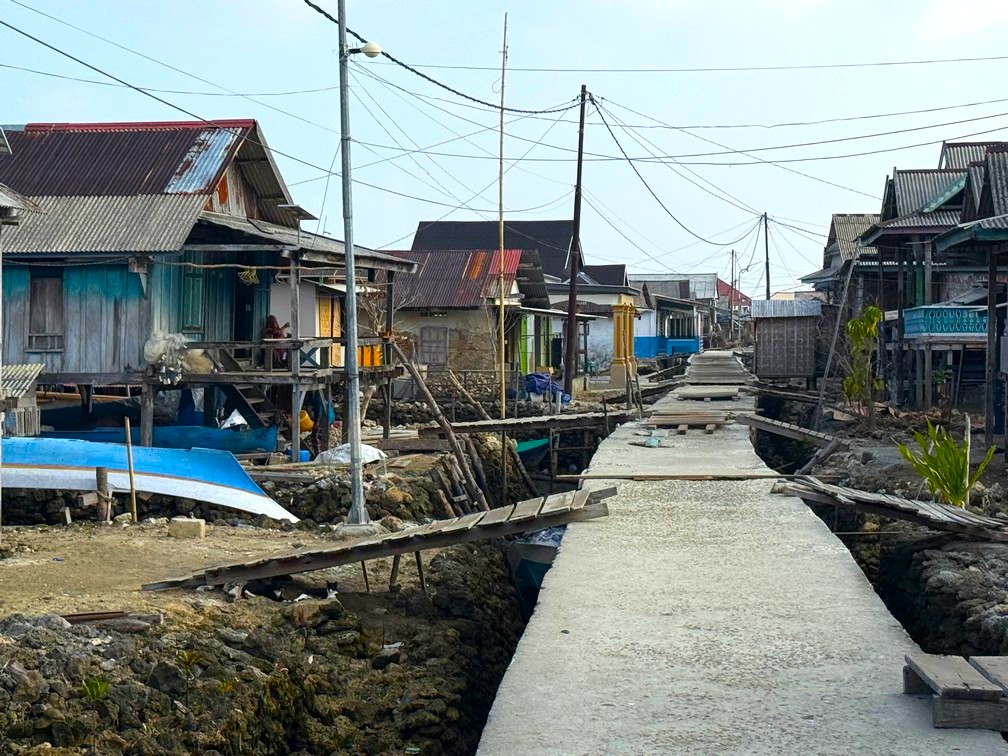
This stood in stark contrast to the trash seen in the mud below the houses (which would have looked far less polluted and far more exotic if the tide was high rather than extremely low). While part of the story is that “You can’t judge a book by its cover” the other part is that a combination of historical BP (before plastic) most everything was organic and would decompose so just tossing it into the water was fine, that culture continues. But it is also exacerbated by the lack of any real waste disposal infrastructure. So whether it is tossed little by little or gathered and then left somewhere, the result is the same. Sad and frustrating.
Anyway, our guide spoke limited English, but I was able to ask him a few questions. They have had 24-hour electricity for the last four years but still have to travel to other villages to purchase drinking, bathing, and cooking water. There were quite a few shops selling pretty much any and everything, and you could tell the shopkeepers were the wealthiest of the village with their nicer homes.
Two women on one side of a boardwalk were grilling fish while a woman on the other side was deep frying them. Both made me feel welcome and proudly wanted me to photograph their culinary prowess.
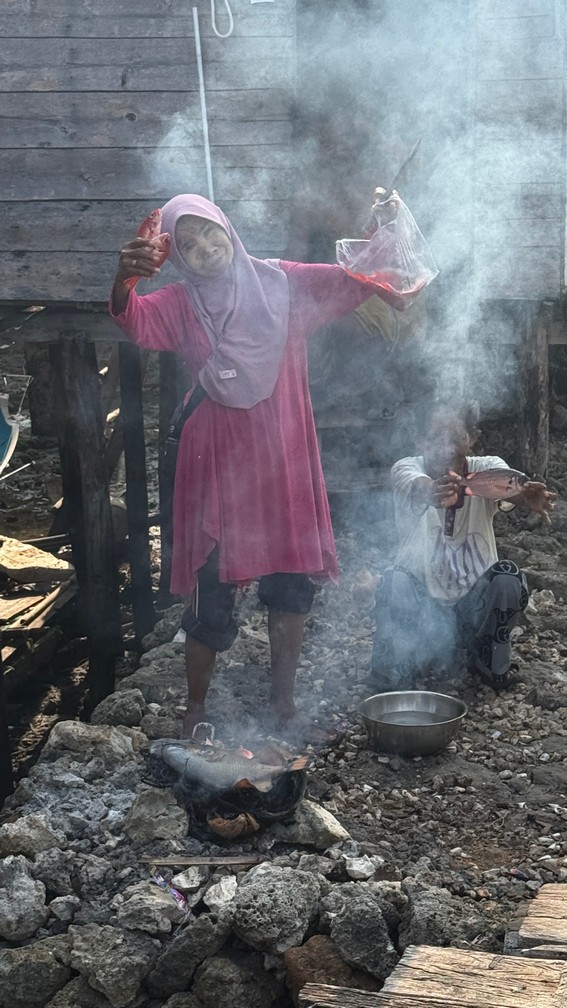
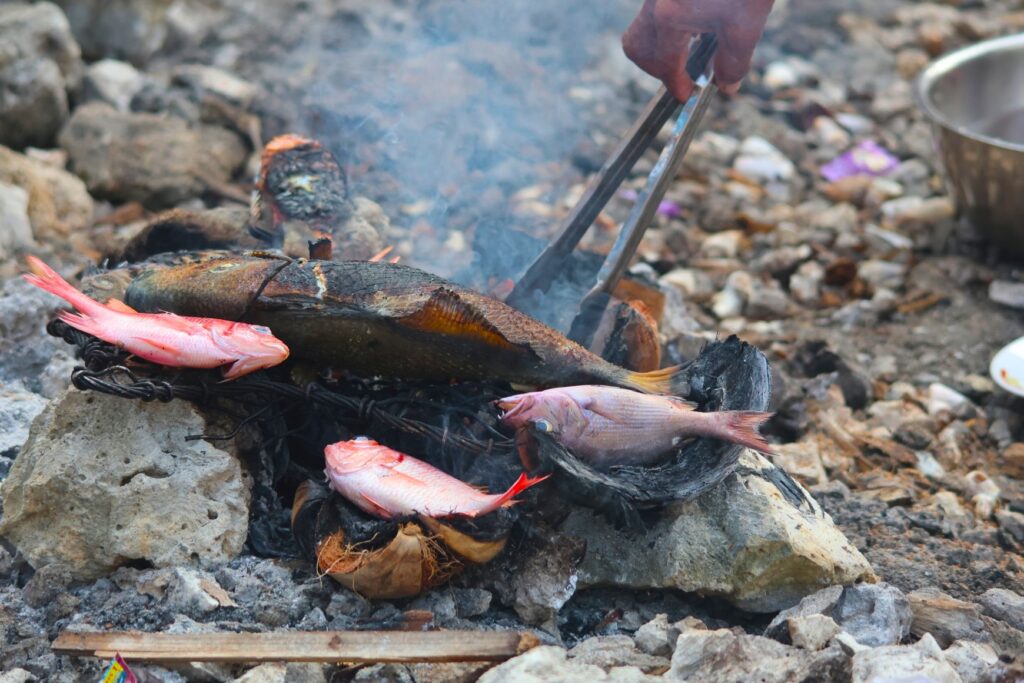
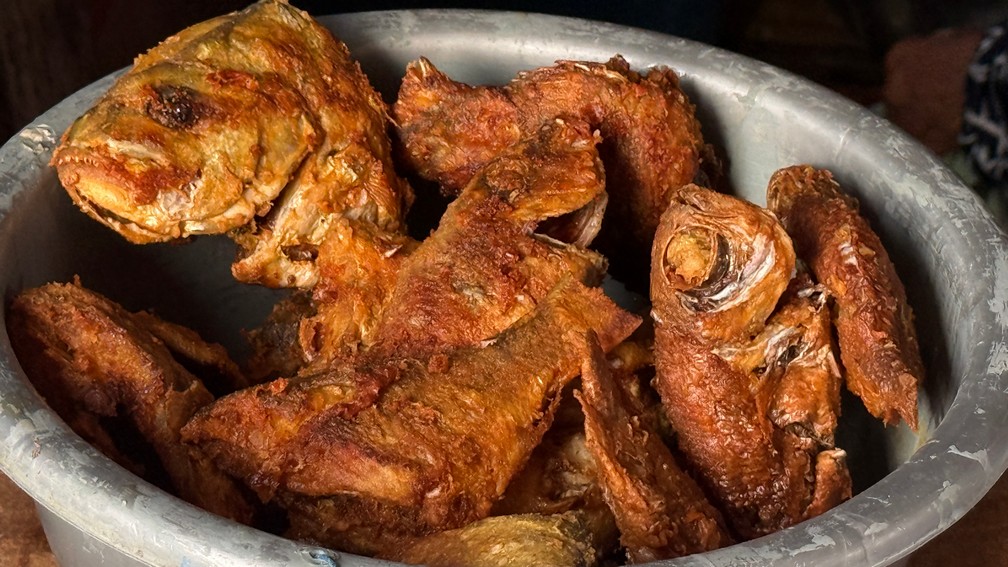
Some of the children and a few women requested I take their photographs, thinking that maybe they just wanted to see themselves or wanted to show off to their friends. I don’t know, but it was sweet.
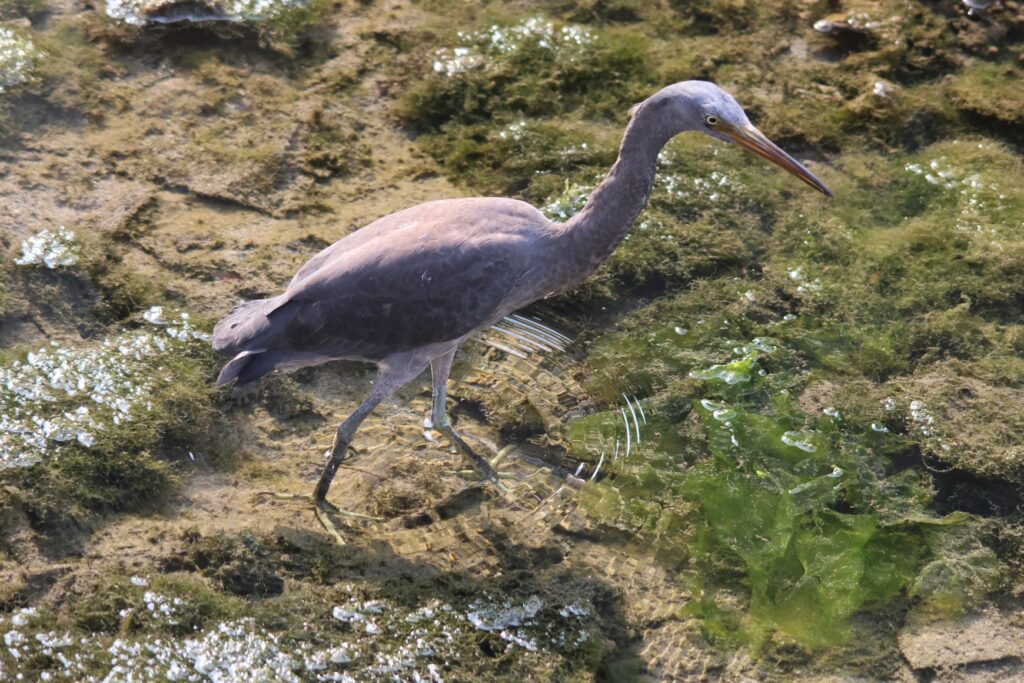
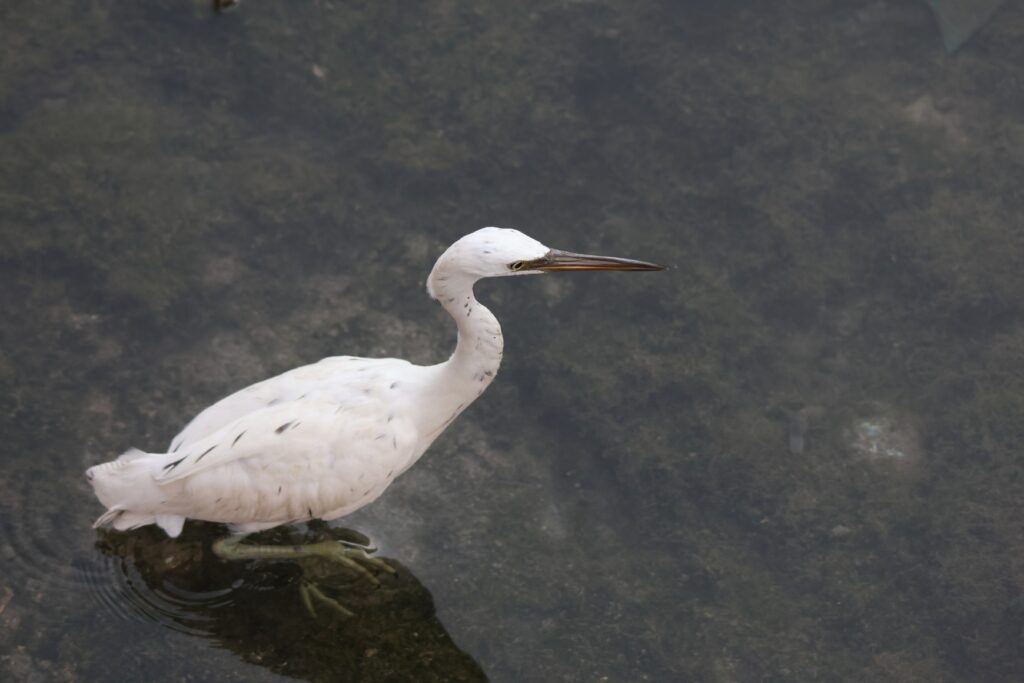
Toward the end of my meander through the village, I came upon two Pacific Reef Herons in two color morphs.
But as exotic as this charming village was in its own right, I did see two white folks (one man and one woman) who appeared to live there, or at least were very comfortable being there. And, funnily enough, one boy who asked me to take his photo responded with, “Grazie!” Ya never know!
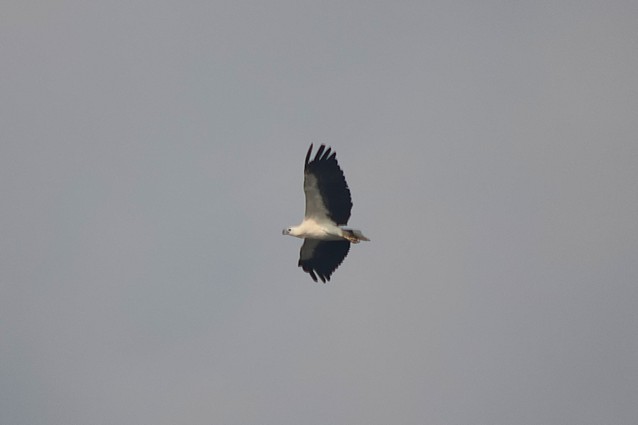
As we departed in our zodiac, a White-bellied Sea Eagle flew above. That would be the extent of my birding for the morning, as the tide still had not risen enough for us to make a landing on Hoga Island. Oh well. In Antarctica, sometimes you can’t land due to ice or wind. In Indonesia, it is an extraordinarily low tide.
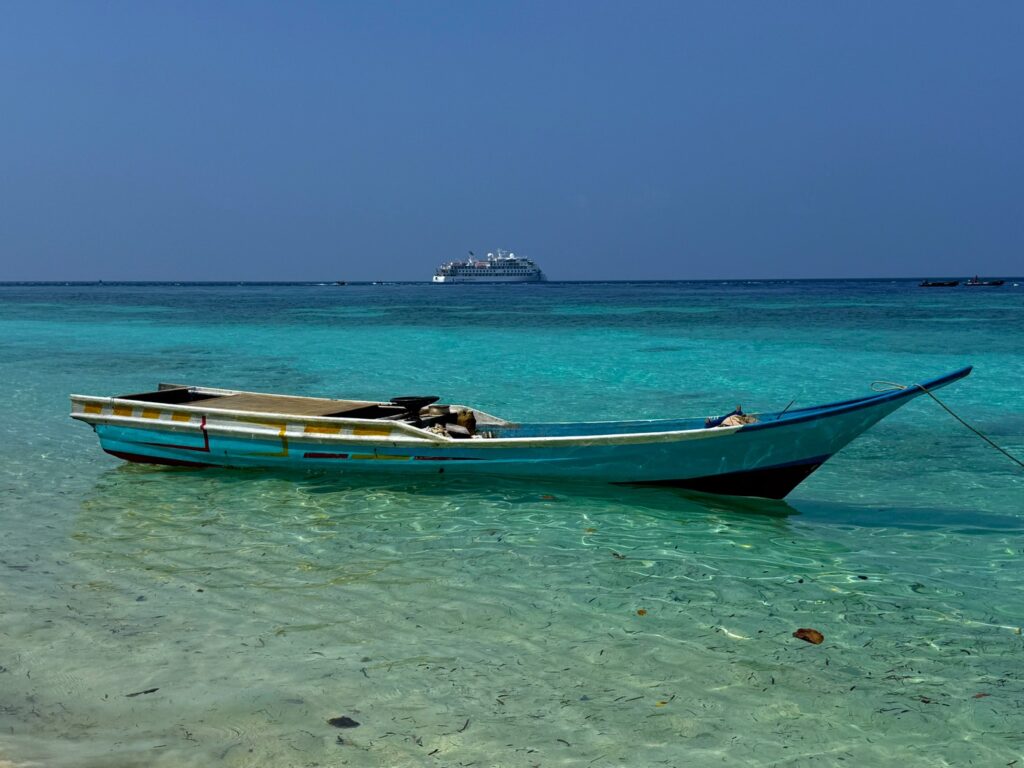
We then sailed to Tomia Island for a bit of a beach day and a snorkel. The small group of kayakers, who haven’t missed an opportunity, were also off and said this afternoon’s paddle was fantastic. For me it was an OK snorkel, but my frustration with what I will call “remedial snorkeling” grew. I didn’t intentionally go off on my own, but it happened. And as I did that, I found the concept of videoing my experience to be less than necessary, having sat in my stateroom and watched over an hour of my previous adventures, saying to myself, “Who is ever going to watch this stuff?” So, I turned the camera off and enjoyed the moments. Those moments included some time along with a sea turtle and another with a blue-spotted stingray. Was it as good as my snorkeling in Raja Ampat? Not even close, as all those amazing corals just took my breath away. But it was enjoyable.
Being on expedition caused another tweak the following day during our visit to Taka Bonerate National Park and Tinabo Island. My early-morning birding and nature walk was put off until the afternoon, when landing would be easier. Other than that activity, there would be two snorkel groups, and each of the three groups could participate in a pseudo-conservation project consisting of supposedly rehabilitating a coral reef, planting a tree with your name on it, and seeing some sea turtle hatchlings.
While the nature walk and birdwatching were shortened due to concern over the heat… because it is clear many on this expedition have no concept of self-responsibility or of limiting their activities to what they can physically handle. Aurora’s expedition team is acutely aware of this and, especially being in such remote areas, must always defer to the weakest (most reckless) so we don’t have to abandon the expedition for what should be an avoidable medical emergency.
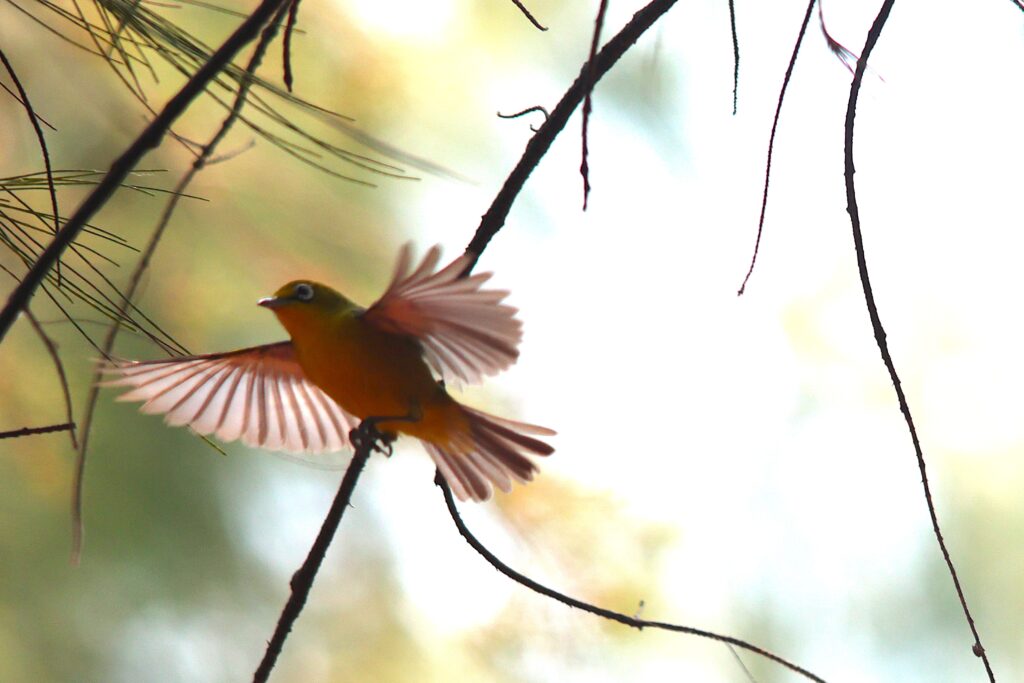
Nonetheless, Tinabo Island is known for the Wakatobi White-eye, a type of warbler, and I was fortunate enough to get a great photograph of one. If I were a fanatical birder, this would have been a highlight of the journey.
I do wish I had an opportunity to snorkel there, as the reports were good. What was outstanding was the snorkeling by the kayaking group. After they paddled around the entire island, seeing baby sharks, tons of starfish, and general beauty, they made two solid snorkels, with one letting the current just push them along. Alas, I am trying to engage in all the activities, so I have to accept I can’t do everything, and FOMO is not healthy! What I am finding is that, at least so far, the nature walks and birding have been the least successful activity.
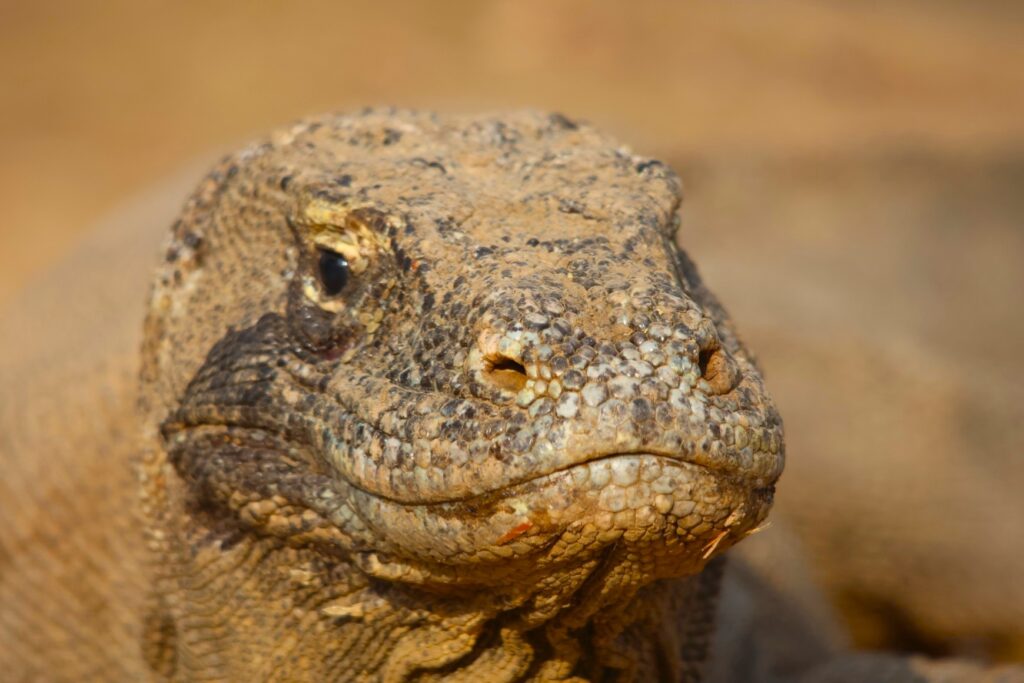
And then the highlight for many: Komodo Island. This is my third visit here and, to be honest, having a 5:30 AM wake-up so we could be on our hike to see the Komodo dragons before all the tourists arrived was well worth it. Aurora tried to divide everyone up into three groups (short, medium, and long hikes). Once again, there was sincere concern over some folks becoming dehydrated, so self-awareness was again set aside by too many. That said, our early start resulted in our seeing a number of dragons, wild boar, deer, and a few bird species I won’t bore you with.
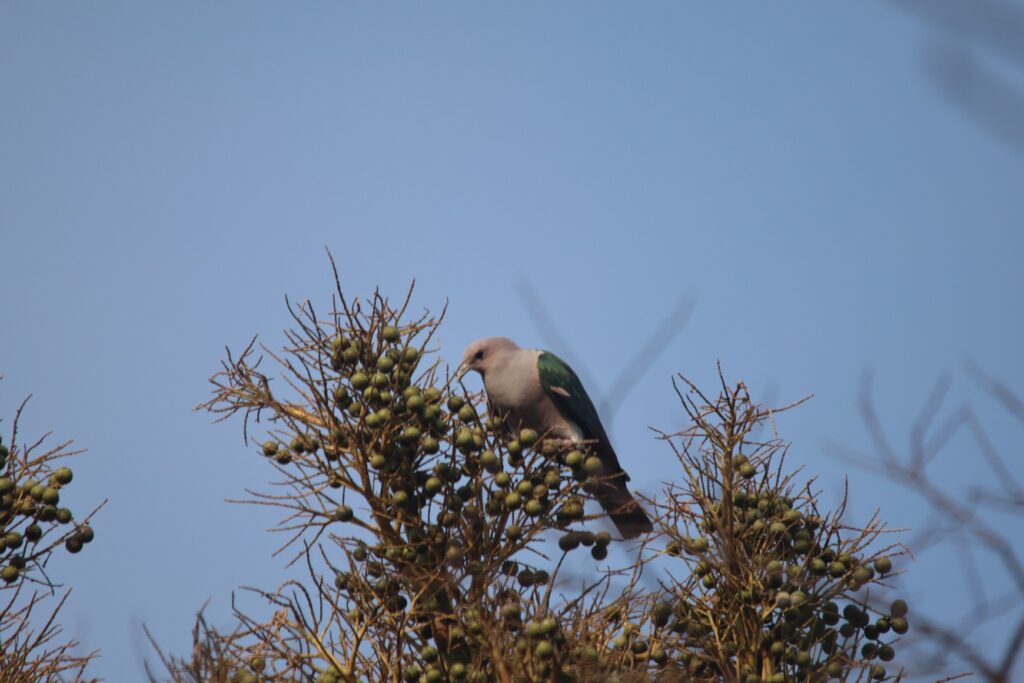
After our hike, there was plenty of time to hit the souvenir shop and then head back to the ship by 9:30 AM to get some work done.
After an early lunch, it was off to Pink Beach for another snorkel opportunity. While I had to frustratingly wait to snorkel as if the expedition team was watching children – for which Aurora’s home office has no basis for requiring same – it was eventually enjoyable and followed by a nice local beer on the beach.
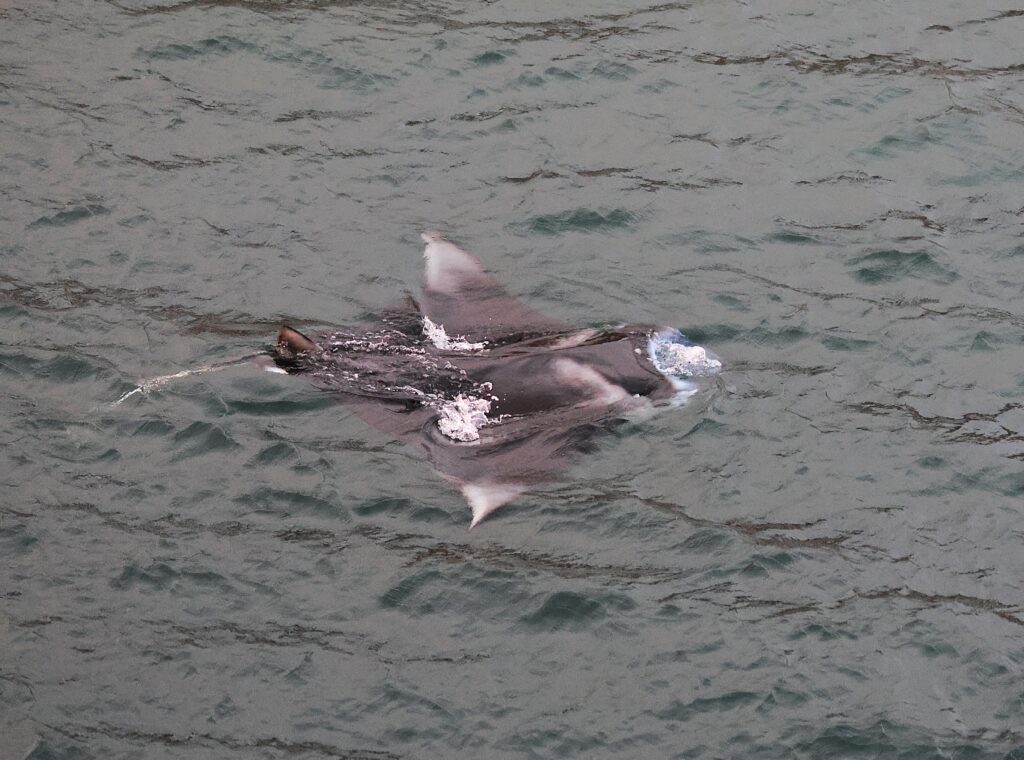
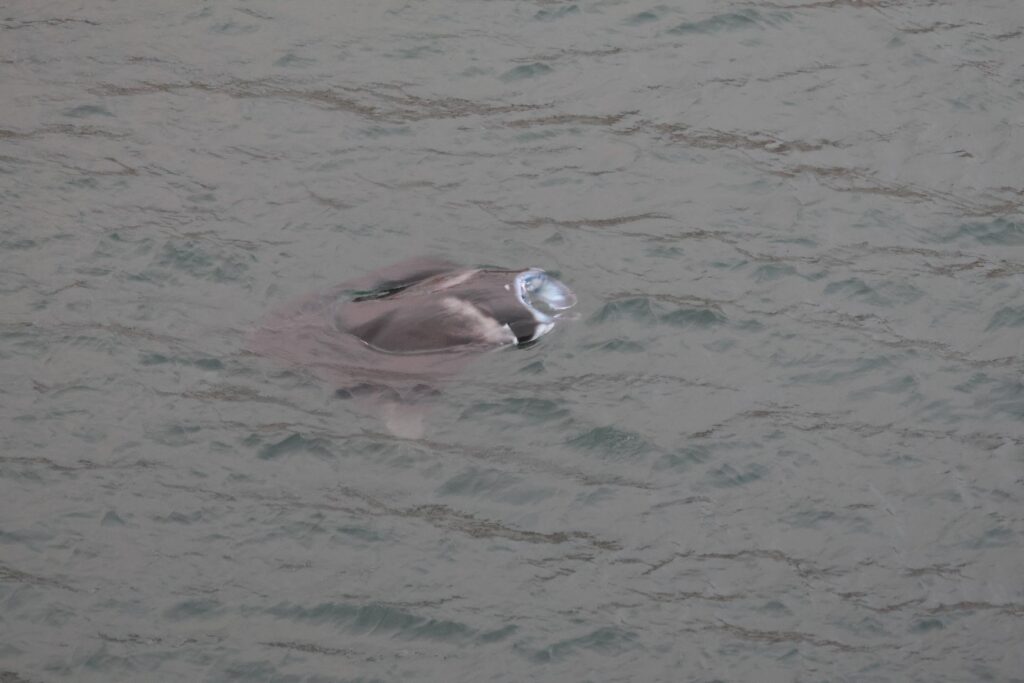
Back on the ship, while getting ready for the Recap and Briefing, Christophe, our Expedition Leader announced: “Manta Rays starboard side at 3 o’clock”. That was right outside of my balcony!
A great end to yet another day on Aurora Expeditions’ Greg Mortimer.
Next up: Hopefully more manta rays and whale sharks!
